Do Snake Plants Like Humidity?
Yes, but not too much. Snake plants do like a bit of humidity, especially if it’s somewhere in the 30% to 50% range, which is considered normal room humidity.
Yes, but not too much. Snake plants do like a bit of humidity, especially if it’s somewhere in the 30% to 50% range, which is considered normal room humidity.
Snake Plants aren’t tropical divas that collapse in dry air, but they’re not desert-exclusive like cacti either.
What’s amazing is that they’re incredibly adaptable.
I’ve grown mine in dry, heated rooms during winter and in muggy bathrooms. Both survived, but one clearly thrived more than the other.
Here’s the secret: they prefer moderate humidity with good air circulation. If it gets too humid (above 60–70%), watch for soggy soil and moldy leaves, which often lead to root rot.
TL;DR: They don’t need high humidity, but they do appreciate a stable environment, not bone-dry or swampy.
And no, misting them daily doesn’t help.
We’ll get to that below.
I’ll walk you through their ideal humidity range, how it impacts growth, and what to do when your space swings from Sahara-dry to rainforest-wet with the seasons.
Keep scrolling 🙂 you’re about to unlock what really matters when caring for Snake Plants in all kinds of environments. 🌿
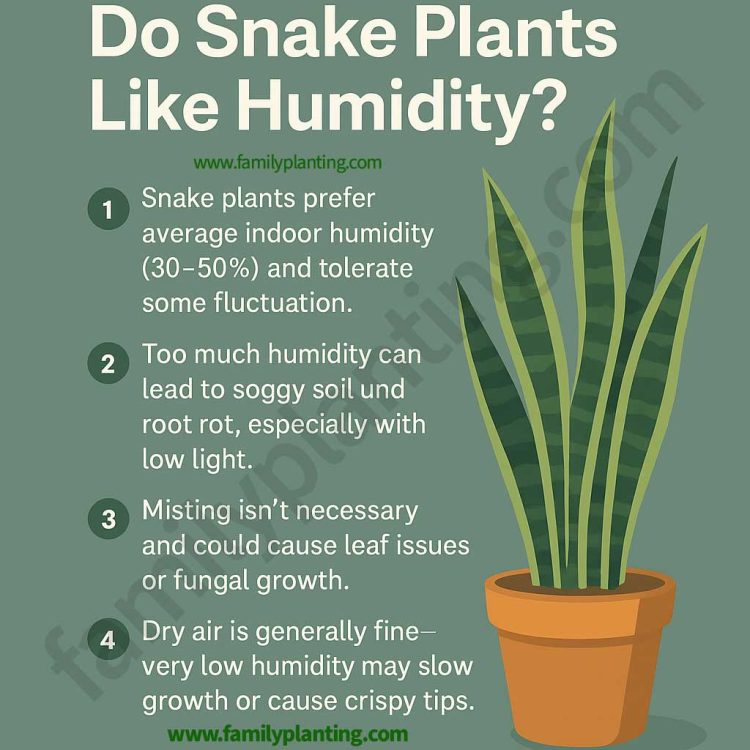
Snake plants like their air like their soil, not too wet.
Snake Plants aren’t picky, but they do have preferences.
In general, they thrive in humidity levels between 30% and 50%.
That’s comfortably within most indoor environments, making them wonderfully low-maintenance houseplants.
If your home has average humidity, your Snake Plant is probably already happy.
But when conditions swing, think dry winter heat or tropical, steamy bathrooms, you might want to tweak your care routine.
From experience, excessive humidity paired with poor airflow leads to trouble.
Signs to watch for include:
On the flip side, super dry air may cause leaf tips to shrivel or curl slightly, but Snake Plants are surprisingly resilient.
I keep a simple digital hygrometer nearby, it’s helped me catch winter dry spells and post-shower humidity spikes that sneak up fast.
Here’s what many folks get wrong: Snake Plants don’t love high humidity.
When combined with overwatering or poor airflow, you’re looking at a fast track to rot, mushy foliage, and even fungus gnats.
While dry air rarely kills them, it can slow growth or cause minor cosmetic issues like leaf curling.
In my experience, the sweet spot is around 40%. That keeps foliage upright and firm, while avoiding mold or crisp tips.
A cheap hygrometer can be a game-changer in catching those subtle shifts throughout the seasons.
| Humidity Level | Effect on Snake Plant | Suggested Action |
|---|---|---|
| Below 30% (Dry Air) | Leaves may curl or crisp at the tips; slowed growth | Don’t mist. Water when soil is dry. Use a humidifier or pebble tray if needed. |
| 30–50% (Ideal Range) | Healthy leaves, strong growth, no stress signs | Maintain existing care—this is the sweet spot. |
| 50–60% (Moderate Humidity) | Generally safe, but risk of soil staying damp increases | Ensure good airflow and use fast-draining soil. Reduce watering frequency. |
| Above 60% (High Humidity) | Risk of rot, fungus gnats, mold, or mushy leaves | Increase airflow, avoid misting, check drainage. Only water when dry. |
💧 Skip the misting! Snake plants aren’t ferns.
Humidity above 60%?
Keep an eye out for mold or mushy leaves.
Humidity might not seem like a big deal when looking at a hardy Snake Plant, but it quietly impacts everything
Snake Plants are tough, yes, but they still have preferences. If humidity gets too high, especially with poor air circulation or shady corners, the leaves can become mushy, the soil stays wet too long, and it sets the stage for root rot or fungal issues. On the flip side, if the air is too dry for extended periods (especially in winter), growth may slow, and leaf tips can curl or dry out.
Let’s take a look at how humidity interacts with other key care factors:
These three are like best friends – when balanced, your Snake Plant flourishes.
Here’s how they work together:
If one factor shifts – say, humidity increases – but light and warmth drop, your plant could suffer.
The trio matters: when humidity rises, boost airflow and light to keep things in check.
Not really.
While it’s tempting to think “more moisture = faster growth,” with Snake Plants, too much humidity is more of a threat than a benefit.
I’ve tested them in humid bathrooms: they survived, sure, but were far more prone to root problems without vigilant watering and airflow management.
So, can they handle humidity?
Yes.
Do they enjoy it?
Not particularly.
Should you place them in a damp greenhouse or mist them daily?
Definitely not.
Dry apartment?
No sweat, snake plants will manage just fine.
Let’s clear up the confusion about what Snake Plants actually do with humidity.
Many people wonder if these plants manage moisture in the air.
Short answer?
Not really in a major way, but they play a small supporting role.
Technically, yes, but very minimally.
Like all plants, Snake Plants absorb tiny amounts of moisture through stomata (microscopic pores on their leaves), especially when humidity is high.
But the bulk of their hydration still comes from the soil.
If you’re hoping your Snake Plant will soak up humidity in a muggy room?
Don’t count on it.
I once placed several Snake Plants in my laundry room thinking they’d fix the humidity, no luck. They looked great but didn’t help the air much.
Surprisingly, a little.
Through transpiration, Snake Plants release water vapor as they “breathe.”
But the effect is small compared to humidity-boosting plants like ferns or peace lilies.
In dry rooms, a few Snake Plants won’t make a noticeable impact – but when grouped with other houseplants, they can contribute slightly to a more humid microclimate.
Nope, and that’s a common myth.
Snake Plants don’t function as dehumidifiers.
While they may absorb trace moisture, their role in air regulation is negligible.
In fact, if your space is overly humid, Snake Plants might suffer – root rot, soggy soil, and mold are real risks.
If you’re trying to balance indoor air moisture, reach for a dehumidifier when it’s damp and a humidifier if it’s too dry.
Snake Plants shine as low-maintenance, air-purifying decor, not moisture regulators.
Don’t expect your snake plant to fix your humidity problem...
That’s your humidifier’s job.
Embrace the spirit of horticulture and spread the seeds of wisdom